
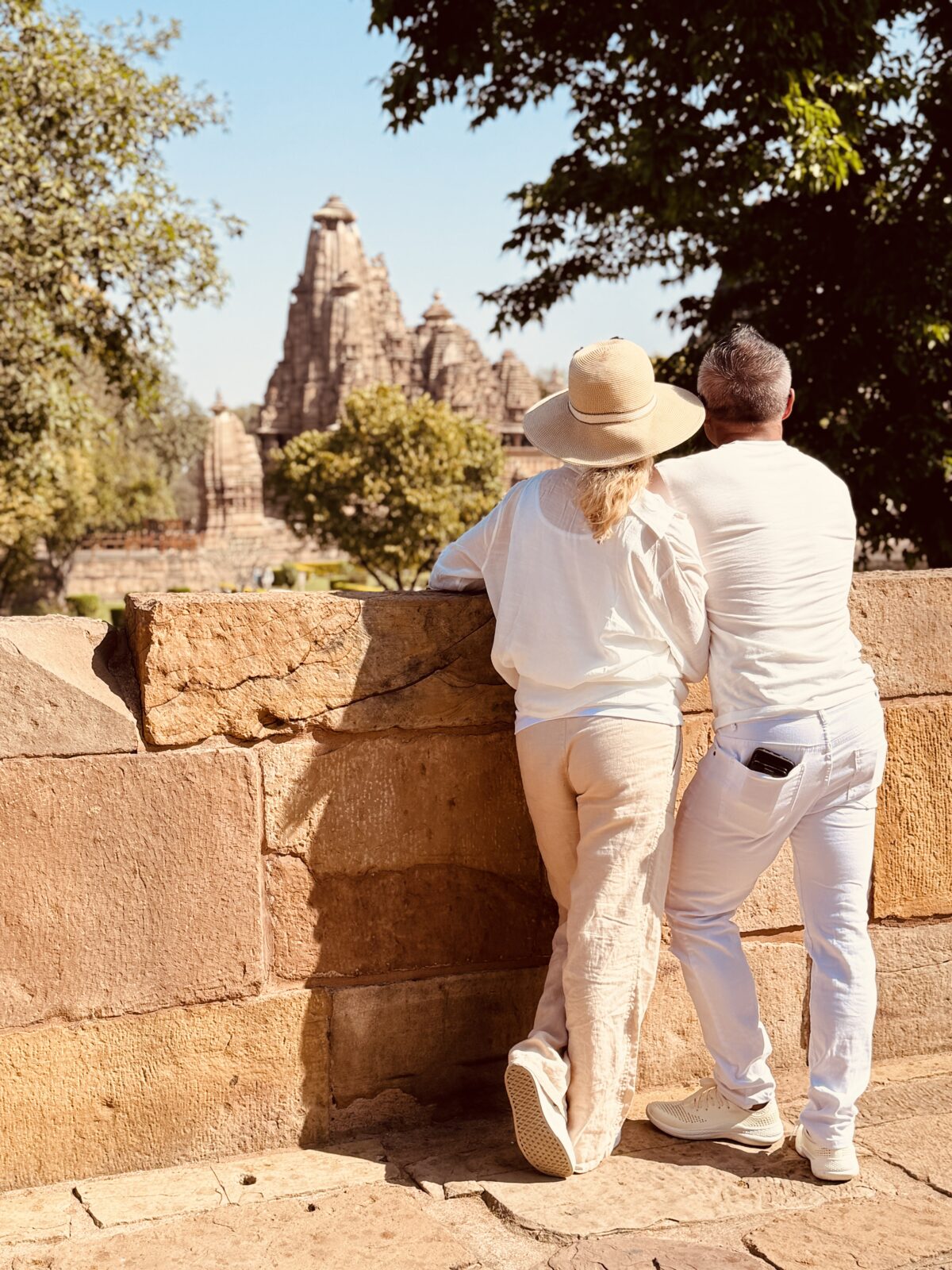
We didn’t plan it this way, but Khajuraho turned out to be the perfect place to experience Holi. This town, built around temples famed for their intricate carvings depicting spirituality, sensuality, and the full spectrum of human life, provided a striking backdrop for a festival celebrating spring, renewal, and the triumph of good over evil. In fact, the temples themselves even illustrate mythological scenes connected to the origins of Holi, making the experience feel like a rare convergence of history, art, and living tradition.
Next Stop: Khajuraho
When we said our tearful goodbyes to our family… ahem, I mean the staff… at Oberoi Vindhyavilas, our driver, Rakesh, collected us for the 6 hour drive to Khajuraho. Read about our time with the tigers at Bandhavgarh here. The drive was, again, picturesque, passing through villages, farmlands, and countryside. Again we climbed into the mountains- this time, many of the roads were being excavated and repaved. In the states, we would have had to detour, but not in India! We powered on… luckily, we made it through the red dirt and clay without punctured tires.

Eventually, we experienced renewed anticipation for tiger sightings as we drove through Panna Tiger Reserve… I think I may have seen one drinking from the river, but it was probably just a stump. We definitely encountered spotted deer, rhesus macaques, and cows. So many cows. In the villages, in fields, walking down the middle of the road… they were everywhere!
Cows
In much of India, cows are revered (not worshipped per se) because they are deeply connected to Hindu religious beliefs, traditional village life, and the idea of nonviolence toward living beings. In Hinduism, the cow is associated with motherhood, generosity, and life because it provides milk, labor, and fertilizer while asking for little in return. Many Hindus also connect cows with deities such as Krishna, who is frequently shown caring for cattle, reinforcing the animal’s sacred status.
Historically, cows were also economically essential in agricultural societies across India. They helped plow fields, transported goods, produced dung for fuel and fertilizer, and supplied dairy products that became staples of daily life. It is easy to understand why protecting cows became both a spiritual and practical value.
Khajuraho
There may have been no more surreal place to experience Holi than among the ancient temples of Khajuraho Group of Monuments. As clouds of bright pink, yellow, and turquoise powder drifted through the air and music echoed through the streets, we found ourselves celebrating one of India’s most joyful festivals in the shadow of some of the most intricate and provocative temples ever built.
Famous for their exquisitely carved Kama Sutra sculptures, the temples of Khajuraho are often misunderstood as purely erotic, when in reality they represent a far deeper celebration of human life, spirituality, love, art, and divine connection. The contrast of centuries-old stone carvings alongside the wild, colorful energy of Holi created an atmosphere that felt almost dreamlike — ancient, chaotic, beautiful, and completely alive.
Other Places to Experience Holi
With that said, if you want the insane crowds, the 8+ hour dancing in the heat with a million sweaty bodies, try Pushkar or Kolkata.
Chat GPT also suggests:
- Mathura and Vrindavan are considered the spiritual heart of Holi because they are associated with Krishna. Celebrations here are intense, devotional, chaotic, and deeply traditional, often lasting more than a week.
- Jaipur offers a more organized and traveler-friendly version with royal settings, cultural performances, and large public celebrations.
- Udaipur is known for elegant palace celebrations and spectacular Holika Dahan bonfires.
- Khajuraho offers a smaller, more local-feeling celebration set against the backdrop of ancient temples, which many travelers find especially memorable and authentic. We were certainly happy with the serendipity that led us here!
Lalit Temple View Hotel
Lalit Temple View Hotel was the nicest hotel in town at the time of our booking. This is why Tapas at Trinetra Tours chose this hotel for us. With that said, it was such a letdown, particularly after the Oberoi in Bandhavgarh. Read my thoughts here if you’d like…I don’t want to rehash the negative here- it was fine, and the location and view were great. Suffice it to say, if I returned, I’d pick the Oberoi. I’ve never stayed at this particular Oberoi, but I’ve stayed at four now and they have consistently been amazing.
Ayurvedic Massage
Our handler in Khajuraho arranged for us to have massages. Ayurvedic massage has its origins in India and is very popular in the area, so we chose to have Ayurvedic treatments.
Khajuraho Group of Monuments
The temples in Khajuraho are divided into two groups: the West Group and the East Group. The “Kama Sutra” temples comprise the West Group, while the East Group is smaller and is made up of several Jain Temples.
“Kama Sutra” Temples
I’ll start with the larger and better known West Group of temples. I don’t understand why more tourists don’t visit these temples- to us, they are second only to Angkor Wat in grandeur, interest, and mystique. But let’s keep this secret, because visiting the site was a very special experience. There were so few tourists and the carvings are so well-preserved.
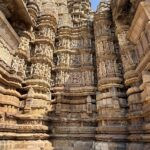
Built between the 10th and 12th centuries by the Chandela dynasty, the complex is famous for its astonishing detail—thousands of carvings depicting gods, dancers, musicians, warriors, daily life, and the sensual figures that made Khajuraho world-renowned. But beyond their erotic imagery, the temples feel deeply spiritual and artistic, blending sacred symbolism with an extraordinary celebration of human life.
While these are known as the “kama sutra” temples, highlighting the erotic imagery which is prevalent here, in reality these temples were built to celebrate the purusharthas, which are the four traditional goals or guiding purposes of human life in Hindu philosophy. Rather than focusing on a single path, the concept suggests that a balanced life includes multiple dimensions of fulfillment:
- Dharma — duty, ethics, righteousness, and living in harmony with moral and social responsibilities.
- Artha — prosperity, success, material wellbeing, and the practical means needed to live.
- Kama — pleasure, love, beauty, sensuality, art, and emotional fulfillment.
- Moksha — spiritual liberation and freedom from the cycle of rebirth.
The idea is that human life is meant to balance all four, not reject the material or sensual world entirely. So rather than taboo, sensuality and sexuality were seen as integral parts of life, not looked on with judgement and shame like they are today. Moreover, women were held in much higher regard in those days than they had been in many places and historical eras since- many are depicted in positions of power and prestige, reading books, carrying swords, etc.
-

- Temple at Khajuraho
-
- Curves of the Female Form
-
- Parakeet Resting
-
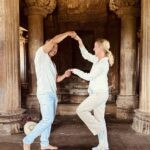
- Dancing Where Royalty Danced
-
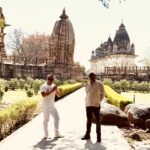
- Vuong with our Guide
-
- Intricate Carvings
The East Group of Temples
The quieter Eastern Group of Khajuraho Monuments offers a very different atmosphere from the grand western temples. These intricately carved Jain temples, built during the same Chandela period, feel more intimate and contemplative, tucked within a peaceful village setting rather than a monumental complex.
Jainism is one of India’s oldest religions and is built around radical nonviolence, self-discipline, and detachment from worldly desires. Some Jain monks and nuns live extraordinarily austere lives, owning almost nothing, eating highly restricted diets, and avoiding harm to even the smallest living creatures. Some will not even eat root vegetables because of the insects harmed in their harvest!
In the Digambara tradition, certain monks practice ritual nudity as a symbol of complete renunciation and freedom from material attachment. Their extreme fasting and minimalist lifestyle are intended not as self-punishment, but as a path toward spiritual purification and liberation from the cycle of rebirth.
Dedicated primarily to Jain Tirthankaras (spiritual masters) such as Parsvanatha and Adinatha, these temples showcase the same extraordinary craftsmanship Khajuraho is known for—delicate stonework, graceful figures, and remarkably preserved carvings—but with a quieter spiritual tone. Wandering through them felt less like visiting a major tourist site and more like discovering a hidden corner of living history still woven into everyday life.
Holi Celebration
Holi is an ancient Hindu festival celebrating the arrival of spring, the triumph of good over evil, and the joy of renewal. Its origins are tied to several legends, most famously the story of Prahlad and Holika, in which a devoted young boy survives a fire through his faith while the evil Holika is destroyed—symbolizing the victory of righteousness over arrogance and cruelty. Holi is also closely associated with Krishna, whose playful throwing of colors with Radha and the gopis inspired many of the festival’s joyful traditions. Today, Holi blends spirituality with celebration, filling streets across India with music, dancing, bonfires, and clouds of brightly colored powder.
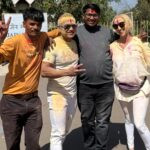
As we toured around the city, we saw several groups of people dancing happily to loud Indian music, throwing brightly colored powder on each other and singing. We laughed, yelled, and waved at them all! One particularly enthusiastic group of guys invited us to join them, so we did! They gave us powder and we hopped, undulated, and swayed to the mesmerizing beats. We even fed each other these gooey sweet balls of fried dough called gulab jamun. During Holi, people often feed sweets to one another as a gesture of celebration and goodwill, and gulab jamun are one of the most common festival treats because they’re rich, sticky, and indulgent in the best way.
We even stopped by our hotel party which was lame… a bunch of white people doing what they thought they should be doing rather than actually joining the real celebrations.
*Pro Tip: My advice to you is- don’t be afraid to mingle with the people! Don’t opt for a white-washed cleaned up experience. Get out there and see what it is really all about! We felt so connected to the people we met and danced with, which reaffirms why we travel- to learn, connect, and dispel fear and prejudice. I felt more “at home” with them than the people at our hotel…
-
- Playing Holi with the Locals

-
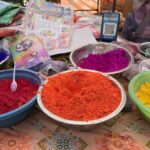
- Colored Powder
-
- With Some Locals
-
- So Colorful

-
- Dancing

-
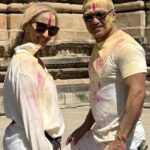
- In Our Holi Colors
Khajuraho Light and Sound Show
To be honest, I thought this was going to be cheesy, but I was mistaken. The reviews were poor to mediocre, but perhaps the show has improved. We really enjoyed it! The lights transformed the temples into their different life stages- with a little imagination, you could “see” the temples under construction, in use, and overgrown with jungle plants and crawling with giant spiders… the narration was fun and told the story of the temples’ construction. The show only lasted about 45 minutes, but we found it entertaining and worthwhile. It was a nice way to end our visit and tie up all we learned with a nice little bow.
*Pro tip: grab seats as far right and forward as possible- best seats in the house will be the rightmost row toward the front. Much of the show is focused on the temple group to your right and, if seated here, you can see the screen in front of you and the spectacle projected on the temples.
The airport was new, clean, efficient, and not crowded. We departed there for our one-hour flight back to Delhi and the start of our Golden Triangle Tour!


0 Comments