
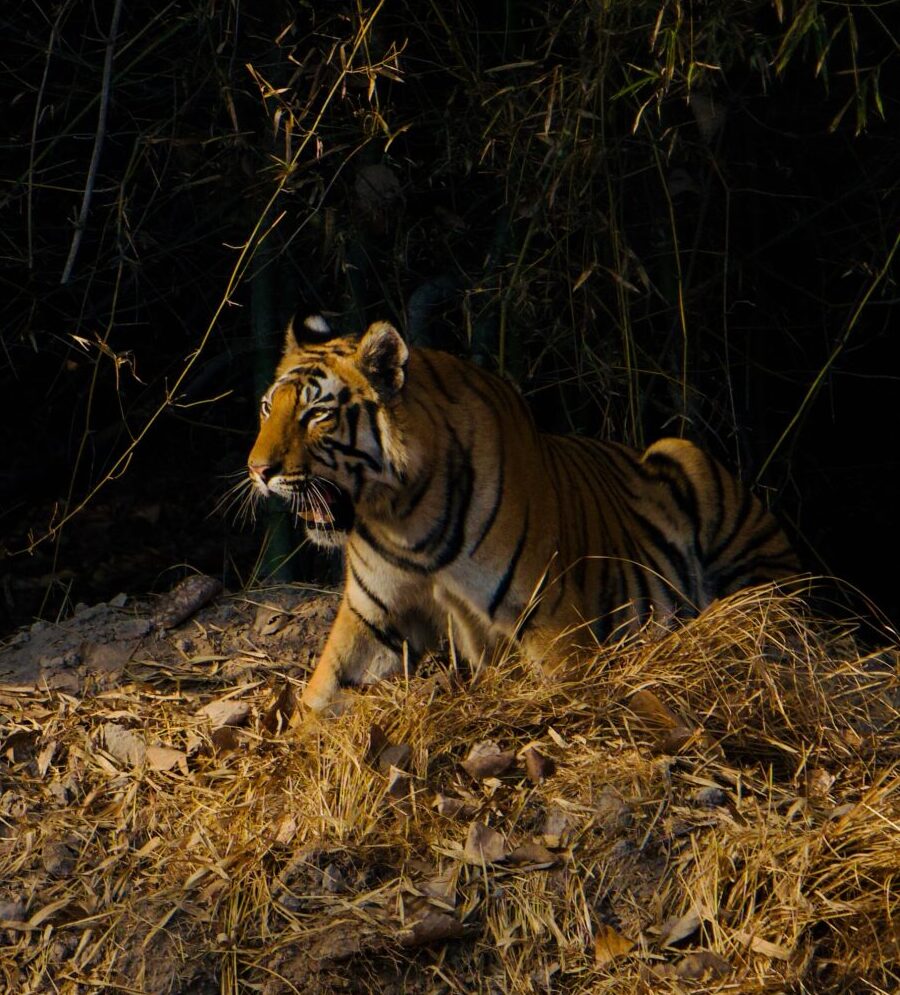
Photo Credit to our Amazing Naturalist Guide, @Bhuwan_gopal
Bandhavgarh National Park delivered one of our most unforgettable experiences in India, with expert guides, skilled drivers, and breathtaking jungle scenery setting the stage for incredible tiger sightings. From misty morning game drives through dense sal forests to the quiet anticipation of tracking wildlife in one of India’s most iconic tiger reserves, every detail of the experience felt deeply immersive. Combined with a beautifully situated lodge that balanced comfort and wilderness, Bandhavgarh offered the perfect blend of adventure, wildlife, and luxury in the heart of central India.

Getting There
On our second day in India, Parveen with Trinetra Tours took us back to Delhi Airport where we caught our 1.5 hour flight to Jabalpur. Read my tips on domestic air travel in India here.
We flew on IndiGo Airlines, which has a lot to like! While IndiGo is not a female-focused airline, it stands out in Indian aviation for its unusually strong representation of women across roles — from cabin crew to an impressive and growing number of female pilots — reflecting a broader emphasis on inclusivity and safety in travel. Moreover, they have a user-friendly app, relatively easy check-in, and a friendly vibe. Most of our flights were on time.
Our driver, Rakesh, collected us from the airport and we set off on the 5+ hour drive to Bandhavgarh. Rakesh gave us just the right amount of information to facilitate retention and recall, combined with long periods of silence which allowed us to nap. He was a truly skilled driver, navigating the progressively steeper, winding roads through villages, hills, and mountains as the sun set and left us in darkness.
Jabalpur has lots of geologic interest, but we didn’t have time to explore. It is also known for its military presence and gun production, with much of its industry centered around the GCF: Gun Carriage Factory.
The drive from Jabalpur to Bandhavgarh National Park, both in the Indian state of Madhya Pradesh, unfolds as a gradual transition from the broad, river-carved plains of central India into increasingly rugged, forested highlands. Leaving Jabalpur, the landscape is shaped by the fertile basin of the Narmada River region, with scattered farmland and small settlements giving way to denser stretches of sal and teak as you move deeper into Umaria district. As the road begins to climb toward the Vindhya ranges, the terrain tightens — long straight highways dissolve into narrower, undulating roads that weave through forested hills and sandstone outcrops.
Arriving in the late afternoon, around 5 pm, the timing adds a cinematic shift to the journey, though I recommend arriving earlier if you can. The sun drops quickly behind the ridge lines, and the light turns golden before fading into the deep greens and grays of the forest. What follows is a stretch of steep, winding mountain roads where visibility narrows, and each bend feels more abrupt than the last.
Headlights emerge suddenly from the opposite direction — small points of light appearing and disappearing around hairpin curves becoming glaring and blinding at the last minute — and the sense of proximity to the terrain becomes almost immediate, as the road clings to the contours of the hills. It’s a drive that feels both beautiful and precarious, where the geography itself seems to press in around you: dense forest on one side, falling slopes on the other, and the quiet tension of navigating a landscape that is very much alive as daylight disappears.
After twisting and turning for what felt like hours, we came upon a restaurant which I think was called “Midway Treat.” We sat at a nice little table on the porch and had butter chicken, which was just OK. But, they had friendly service and clean restrooms (no toilet paper). We regretted eating once we arrived at the Oberoi, because they were fully prepared to offer us a multi-course gourmet dinner (included with our stay) at 11:00 pm.
After leaving our rest stop, we continued to delve into the wilderness. It felt like we had to be close…then, we saw a sign over the road painted in tiger print with Hindi writing. I thought for sure we were almost there, so I asked Rakesh… still another hour!
Past the villages, the road straightened out and became flanked by forest. We began seeing spotted deer everywhere! We passed through one last small village with many cows, then saw the sign for the Oberoi! Trumpets blasted and angels sang as the gatekeeper greeted us with a namaste and opened the heavy wooden gate.
The Oberoi Vindhyavilas
We followed a paved driveway bordered by native landscaping that was neatly maintained, but still felt wild and natural. The grand entrance was flanked by two reflecting ponds, and we were welcomed by doormen, ladies offering ceremonies of welcome and flower garlands, and bellhops ready to whisk our belongings away.

The General Manager on duty, Sheel, seated us in the lobby, which was a modern, elegant version of a safari lodge. The space was warm and inviting, with soft fabrics, leather sofas, and earth toned rugs over hard wood floors. Decor consisted of pottery and other artifacts, as well as wildlife centered artwork. The lobby contained the bar, the restaurant, the gift shop, and the library.
Sheel was like a sweet Indian mother, urging us to relax and eat, but with the polish of an experienced professional in hospitality. We could have had dinner upon arrival, and it would have been much better than the roadside butter chicken we did have..lesson learned! Especially when staying somewhere so opulent, ask the question!
The resort consists of 17 individual tents and villas. Golf carts are available to shuttle you to and from your room, but the walk is nice as well. The tents and villas are connected by a series of paved paths lined by subtle amber lighting and native landscaping. In addition to the main building I previously described, there is a separate spa, a gym and infinity pool by the lake, and a couple of other small buildings for activities and outdoor dining.
Our tent (314), which it technically is since it is made of canvas, was a permanent structure with doors and windows that make up the majority of the wall space, covered by fully automated blinds. A plush, luxurious king sized bed dominated the bedroom space which also contained a small dining table, reading nook, and television. The bathroom was almost as large as the bedroom, and had two sinks, a separate toilet, and large shower. The robes were light and soft, and not oversized, which I like. Sliding glass doors led out to a patio with chairs and loungers.
Everything was included with our stay, except alcoholic beverages and spa treatments: meals, game drives, and educational lectures. Each meal was a multi-course event. Every morning, the general manager checked with us to see if we had special requests for dinner, and of course we did! Each night, we enjoyed regional specialties curated by the chef, and each night he came out to be sure everything was to our liking.
I have to mention the lecture. Yea I’m a nerd and love learning, but this was really good… One of the naturalists employed by Oberoi, Soulin Chakraborty, gave us a private lecture about tigers that had me enthralled! He was so passionate about the topic and presented the information so well. I won’t nerd out too much here, but don’t miss this lecture if you visit. A craft cocktail from the bar might help.
Let me just stress that this is one of, if not THE, most amazing place I’ve ever stayed (and I’ve stayed in some pretty amazing places). The property itself was immaculate, had a strong “sense of place,” and boasted understated elegance. The service was over-the-top but still somehow felt genuine. Every person we encountered seemed to remember our names. They catered to our every whim and I almost shed a tear when we had to leave…
I’ve already mentioned Sheel, but another person who made our visit extra special was the General Manager, Vikas Sawhney. While in India, we stayed in 4 different Oberois and two Taj properties and it was here that we experienced the best service in the world. Seriously, if you want to see the tigers in India, splurge on a stay at the Oberoi Vinhyavilas, and be sure to spend 3 full days here if you can swing it- 2 days for safaris and one to enjoy the property.
-

- Individual Luxury Tent

-
- Lobby

-
- Infinity Pool by Pond

-
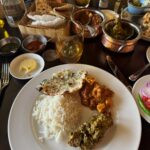
- Indian Feast
-
- Robe

-
- Chair in our Tent

Bandhavgarh National Park
Details
As we arrived in Bandhavgarh National Park, we stepped into a different rhythm of India — one ruled not by temples or cities, but by forest, silence, and anticipation. Between early morning safaris, mist rising over dense sal and bamboo, and winding tracks cut through untouched wilderness, every moment carried the quiet hope of encountering the elusive Bengal tiger in its natural domain. What made the experience even more unforgettable was not just the wildlife itself, but the seamless way it all came together — expert naturalist guides who read the forest like a language, skilled drivers who navigated the terrain with ease, and a lodge that felt like an extension of the jungle, blending comfort with raw, immersive nature.
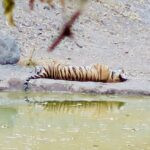
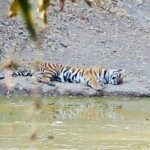
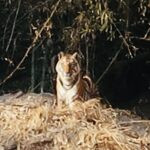
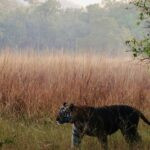
Note: At the time of writing, cell phones are NOT allowed in the park. It seems to be in order to prevent geotagging and protect the wildlife. This enhanced my regret at not bringing my DLSR and is the reason I won’t be sharing lots of amazing wildlife photos that I took…Luckily, our guide was a budding photographer and is generously sharing his photos with us.
Safari Drives
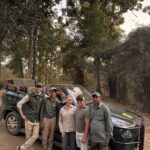
Each morning began with a 5 am wake-up, followed by coffee and pastries. Then, we were escorted to our fancy Scorpion 4X4 vehicle, exclusive to this Oberoi property. Our naturalist guide, Bhuwan Gopal, greeted us and led us to our private vehicle. He had placed warm blankets topped with hot water bottles in our seats, and then he personally wrapped us in those warmed blankets for the drives to the park. The morning games drives lasted from about 5:30 am to 11:00 am, then we’d return to the resort for lunch and head back out in the afternoon around 2:30 pm. We’d return for the evening around 6:00, shower, have dinner, and go to bed.
*Pro tip: If you have the opportunity to visit this resort, add an extra night and schedule one day of down time so you can enjoy the resort. The spa is lovely, and the infinity pool overlooking the pond is idyllic. You might have a few monkeys to keep you company!
Each day, Bhuwan and our driver, Dev, would pick us up and we’d pick up our local guide/tracker, Rajesh. On each game drive, we visited a different area of the park. Entrance and exit were strictly regulated, with specific numbers of vehicles and tourists allowed in and out every day. This allowed us to search for and observe game in relative isolation, encountering other vehicles occasionally. The only time we experienced crowding was in the vicinity of a tiger sighting.
Like on an African safari, the guides stay in communication with each other and keep each other informed about sightings. Several vehicles inevitably end up crowded together, watching and waiting quietly. It is a point of pride to be the first to find a tiger at any given time, and they definitely keep score! At the site of a sighting, the excitement is palpable- not just among the tourists who may be seeing their very first tiger, but among the naturalists, guides, and drivers! It was a joy to see these guys, grown men who have probably had hundreds of sitings, still get excited about watching these big cats.
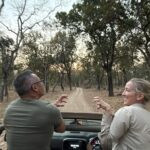
-
- Bhuwan, Dev, Me, Vuong, and Rajesh

Tigers
Tigers are obviously the main draw of these safari parks in India. This did not happen by chance.
When Prime Minister Indira Gandhi, aka Mother of Tigers, launched Project Tiger in 1973, India’s wild tiger population had collapsed to fewer than 2,000 animals after decades of hunting, poaching, and habitat loss. Her government created a network of protected tiger reserves, strengthened anti-poaching laws through the Wildlife Protection Act, and shifted India’s attitude toward wildlife conservation.
Today, the program is considered one of the world’s greatest conservation success stories: India is now home to roughly 3,682 wild tigers—about 70% of all wild tigers on Earth—spread across 58 tiger reserves and thousands of square miles of connected forest habitat. These parks are not isolated islands; many are linked by wildlife corridors that allow tigers to move between reserves, maintain genetic diversity, and recolonize new territory. Landscapes such as the Central Indian Highlands form vast interconnected ecosystems where tigers can roam between parks like Kanha National Park, Bandhavgarh National Park, and Pench National Park, creating a conservation network that has helped pull the species back from the brink of extinction. (en.wikipedia.org).
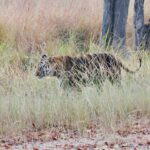
We saw a total of 8 different tigers on two of our 4 game drives. The first two were lounging by a pond. They were massive and beautiful, but far away. A third soon snuck out of the forest for a brief appearance, then left. We shared this experience with a rotation of 10+ other vehicles. Later on the same drive, we sat with a few other vehicles and watched the grass for what seemed like hours, because someone had seen a big cat settle down. I had always wondered how these brightly colored cats managed to camouflage themselves in the more muted tones of savannah grass… well, it worked, This guy was essentially invisible.
We knew he was there, because every few minutes, we heard a moan/growl. It was loud and a little spooky… finally, he got up. Everyone excitedly whispered and pointed, and engines quickly came to life. We moved as one unit slowly in the direction the cat was walking. He disappeared into the woods… we stopped at a point where our guides thought he would come out and killed the engine. Then we waited…
Moments later, he emerged from the forest and was walking directly toward us. As he approached, the growls became louder. He. Kept. Coming. And we waited… eventually he crossed the road behind us. But what a chilling, exhilarating feeling to watch his lithe frame stalk toward us. He walked slowly but covered ground quickly because he was huge! Totally worth the wait.
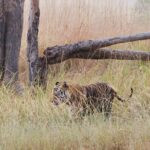
The next time we saw them required less waiting. We immediately drove past golden, sunlight-bathed vistas to a large body of water. We turned off the engine and Rajesh almost immediately starts screaming “tiger tiger tiger!” We saw a huge head pop up from behind a log in the water, soon followed by a massive body, and he quickly left the water and stalked toward us. His body appeared black on the bottom half where it was wet, and he continued unhurriedly toward his destination. He was ignoring us but obviously keenly aware of our presence. Then he was gone.
Later, we stopped to use the “bush loo.” Then, the highlight of my day occurred.
Rajesh was one of those guys- he was obviously intelligent and confident, with a self-effacing sense of humor that the other guys fed into. As our local guide, he had extensive first hand knowledge of the area and all its inhabitants. He was super easy to be around, and even easier to like. Despite growing up in this area, he still lit up with a child-like excitement when a tiger was near…
We are driving down the road when suddenly, Rajesh stands up and starts shouting “tiger tiger tiger! go go go!” and literally tosses his cell phone out of the vehicle onto the ground! Why? We will never know. But it about killed me every time I thought about it… and I let him know, ribbing him about it every time it crossed my mind.
Dev sped through the woods like a maniac in search of said tiger, leaving the cell phone in the dust! Then, we saw tiger #8 off in the distance walking through the woods. Luckily, we found the cell phone a bit later.
Other Flora and Fauna
Beyond its famous tigers, Bandhavgarh National Park is one of India’s richest ecosystems, a mosaic of sal forests, bamboo thickets, grasslands, and rocky hills that support an extraordinary range of wildlife. Leopards move quietly through the dense forest, while sloth bears, Indian gaur, sambar deer, chital (spotted deer), nilgai (blue bulls), barking deer, and wild boar roam the meadows and valleys. Troops of Hanuman langurs chatter from the treetops, often acting as an early warning system for predators below.
The park is also a paradise for birdlife, with more than 250 recorded species including crested serpent eagles, Indian rollers, paradise flycatchers, owls, kingfishers, and vibrant green bee-eaters. The most majestic of all, the peacocks, were so plentiful you almost stopped noticing them. In the early morning, the forest comes alive with birdsong, drifting mist, and the scent of damp earth and mahua blossoms, creating a landscape that feels both untamed and deeply ancient.
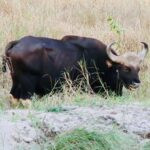
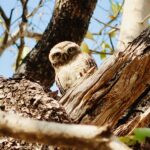
We saw tigers on two of our four drives, but the other two were not disappointing at all. Highlights included seeing the long-tailed Indian Paradise Flycatcher, the barking deer, two owlets in a tree, and the freakishly muscular Indian gaur. One of the funniest, most wonderful sites we witnessed was a peacock performing his elaborate mating ritual for a peahen. I mean, this guy was trying so hard and she was not having it! He hopped from leg to leg, shaking his tail feathers (literally) and whooshing his plumage forward and back as if trying to lure her into his grasp. We could actually hear the feathers rustling!
*Pro Tip: What I saw as a simple add-on when planning this trip turned out to be a highlight. I regret not having brought my DSLR camera, because I could have gotten some great pix. Luckily, Bhuwan is a budding wildlife photographer and shared his photos with us. My advice to you- GO SEE THE TIGERS at Bandhavgarh, stay at the Oberoi, and don’t worry so much about packing uber-light, bring the fancy camera!
-
- Indian Gaur
-
- Owlet
-
- Entrance to Park
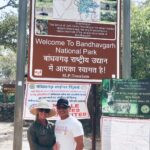
-
- Rhesus Macaque
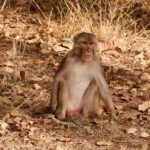
-
- Elephant Boarding Platform
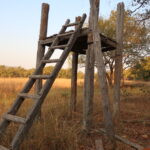
-
- Peacock and Peahen
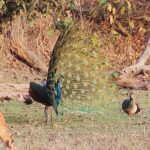
If you are a wildlife enthusiast or enjoy safaris, you must go to India and search for tigers! I highly recommend Bandhavgarh- it may be remote and difficult to get to, but it is so worth it. Trinetra Tours can set you up!
Come back next time as we shift gears to celebrate Holi in Khajuraho, home to the Kama Sutra Temples! Just when we thought India couldn’t become more vivid, we arrived in Khajuraho on the eve of Holi. The silence of the jungle gave way to clouds of color, music echoing through ancient temple streets, and one of the most joyful, chaotic celebrations we have ever experienced.



0 Comments