Possibly my favorite country in the world because it produced my wonderful husband and his family, Vietnam was personal to me long before I ever set foot there.
Vuong was born near Nha Trang and escaped Vietnam with his family in 1975 during the fall of Saigon. By the time I finally visited, I'd already spent years eating Vietnamese food, hearing family stories, and getting to know the formidable women of the Do family.
Vietnam wasn't simply some exotic place on the other side of the world.
It was the place these people I loved had come from.
I wanted to see it.
More than that, I wanted to understand it.
What kind of place had produced these people I loved?
I've now been four times.
I'm still figuring it out.
My First Vietnam
We made our first trip in 2017, when, as I've written before, we were still babes in the travel womb.
I'd traveled internationally, but I wasn't yet the traveler I am now. We hired a high-end tour company and let them handle most of the logistics. These days, that amount of hand-holding would probably make me crazy.
Back then, it was exactly what we needed.
Our original plan was ambitious: start in Hanoi and work our way through Vietnam from north to south.
Then a Vietnamese friend told us about a major pollution incident along the coast. A Chinese company had discharged pollutants into the South China Sea, resulting in massive fish deaths and concerns about eating seafood in parts of central and southern Vietnam.
Seafood is not exactly a minor consideration when Vuong and I travel.
So we changed the plan.
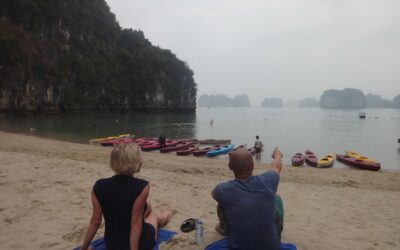
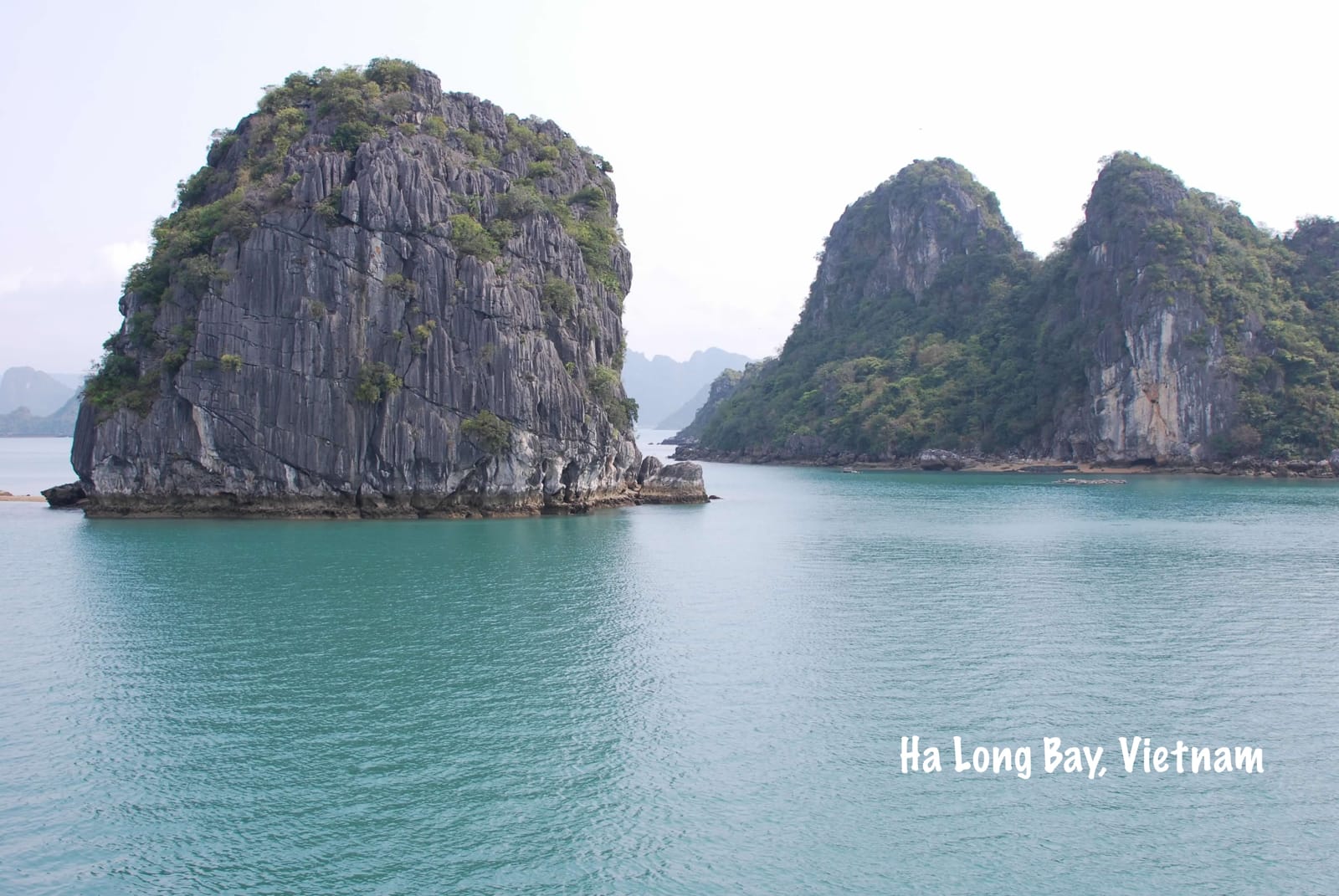
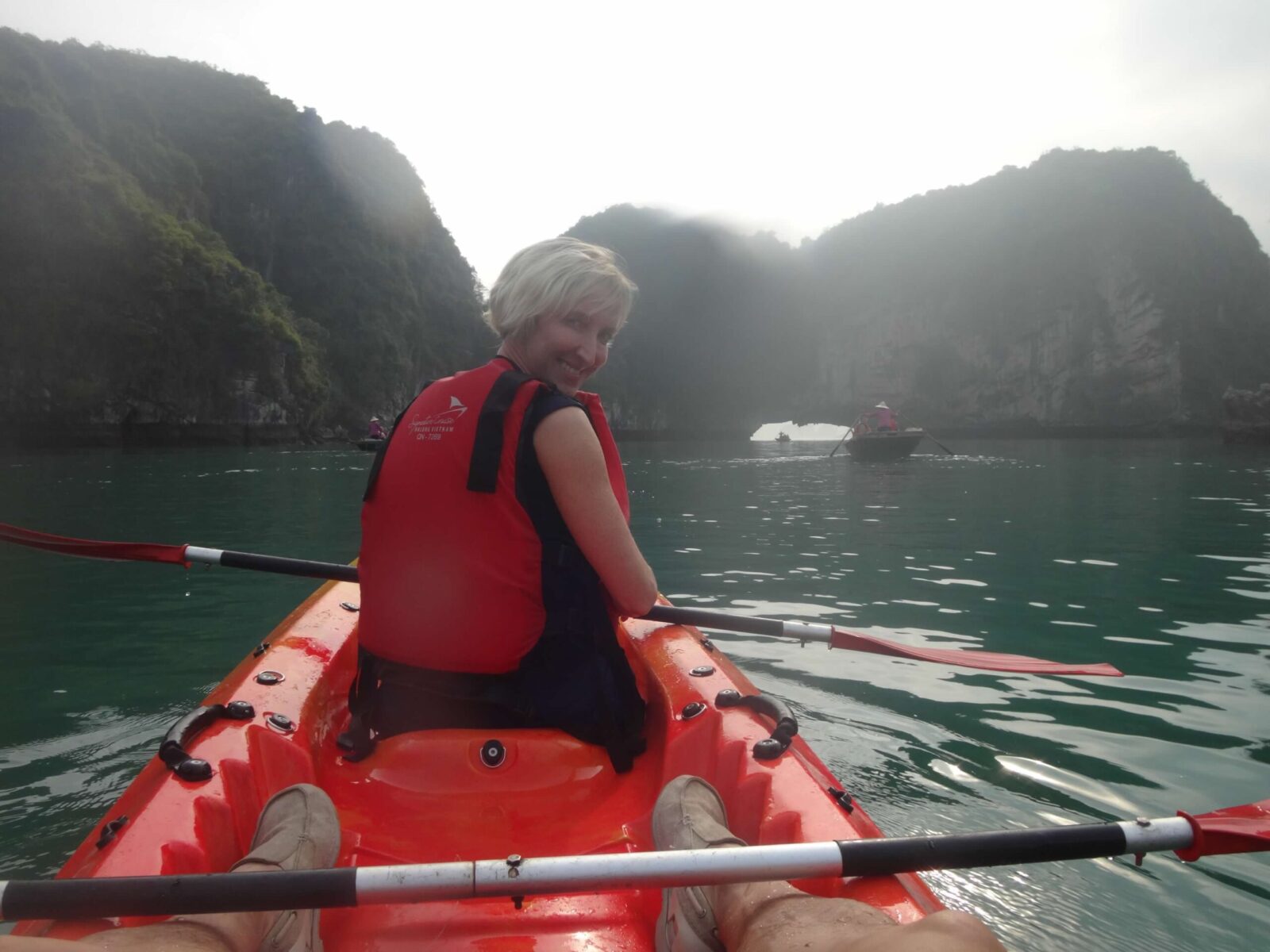
Instead of trying to "do" the entire country in one trip, we concentrated on northern Vietnam—Hanoi, Ha Long Bay and Sa Pa—and saved the rest for another time.
In retrospect, I'm glad we did.
Vietnam isn't really a country you "do."
Our tour company arranged everything, but they used local guides, and in Hanoi we met Eddie Do.
Yes. Do.
Clearly, he was family.
Eddie quickly became Vuong's "brother from another mother." He was from Hanoi and firmly preferred northern Vietnamese food.
We preferred southern.
This became a matter of some friendly debate.
It was also one of my first lessons that "Vietnamese food" isn't really one cuisine. Regional differences matter, and Vietnamese people have opinions about them.
Strong opinions.
Vietnam hit me almost immediately.
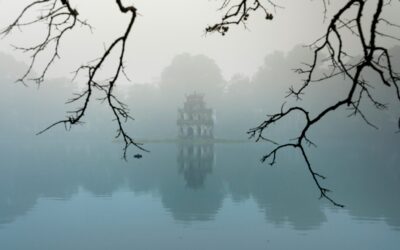
I remember riding through Hanoi staring out the window at motorbikes flowing around us in every direction, horns blaring, electrical wires tangled impossibly overhead, and old buildings standing beside new ones.
Then I had to learn how to cross the street.
If you've never crossed a busy street in Hanoi, the natural instinct is to wait for traffic to stop.
It will not.
Eventually you learn to step into what appears to be certain death and walk steadily across the road while hundreds of motorbikes somehow flow around you like water around a rock.
It sounds insane.
It works.
Mostly.
And then there was the food.
Pho. Bún chả. Bánh cuốn. Egg coffee. Fruit. Things being cooked on tiny grills along the street. Some of our best meals came from places where the furniture appeared to have been designed for kindergarteners.
I quickly discovered something about the way I like to travel: I'd rather eat where local people are eating than be delivered to a polished restaurant full of other tourists.
That hasn't changed.
From Hanoi we traveled to Ha Long Bay and then north to Sa Pa, taking an overnight train while wearing the Singapore Airlines pajamas I'd apparently decided were appropriate train attire.
We looked like we'd escaped from some sort of dystopian future.
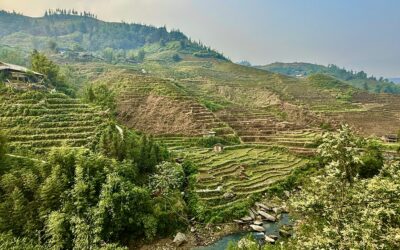
Sa Pa was misty and mountainous and completely different from Hanoi. Rice terraces disappeared into the clouds. Hmong women walked with us through the countryside, talking about their families and their lives.
One elderly Hmong woman took a particular liking to Vuong.
She pinched him.
She patted him.
She smacked him on the butt.
Finally, Vuong turned around and told her in Vietnamese, essentially, "Stop it, Grandma!"
Calling her Grandma wasn't an insult. Vietnamese uses kinship terms based on someone's age and relationship to you, even when you're not actually related. And when you're uncertain, it's generally better to err on the side of assuming someone is older.
There was no uncertainty here.
She was Grandma.
And Grandma needed to stop grabbing my husband.
By the time we left Vietnam, I knew one thing for certain.
I wanted to come back.
Vietnam Made Me Curious
When I got home, I started reading.
A lot.
For an American looking for books about Vietnam, one subject inevitably dominates the shelves: the Vietnam War.
So I read about the war.
But I read other things too.
I wanted to understand more about Vietnam's history, its culture and its people. I wanted context for some of the things I'd seen and some of the stories I'd heard. And I wanted to know more before we went back.
The more I read, the more obvious something became.
Vietnam was much bigger than the version of it I'd grown up hearing about.
For many Americans, particularly those of my generation and older, the word Vietnam comes with another word attached to it:
War.
The Vietnam War profoundly affected lives on both sides of the Pacific. Its effects followed Vietnamese families—including Vuong's—around the world, and it shaped an entire generation of Americans.
You can't tell Vietnam's modern story without it.
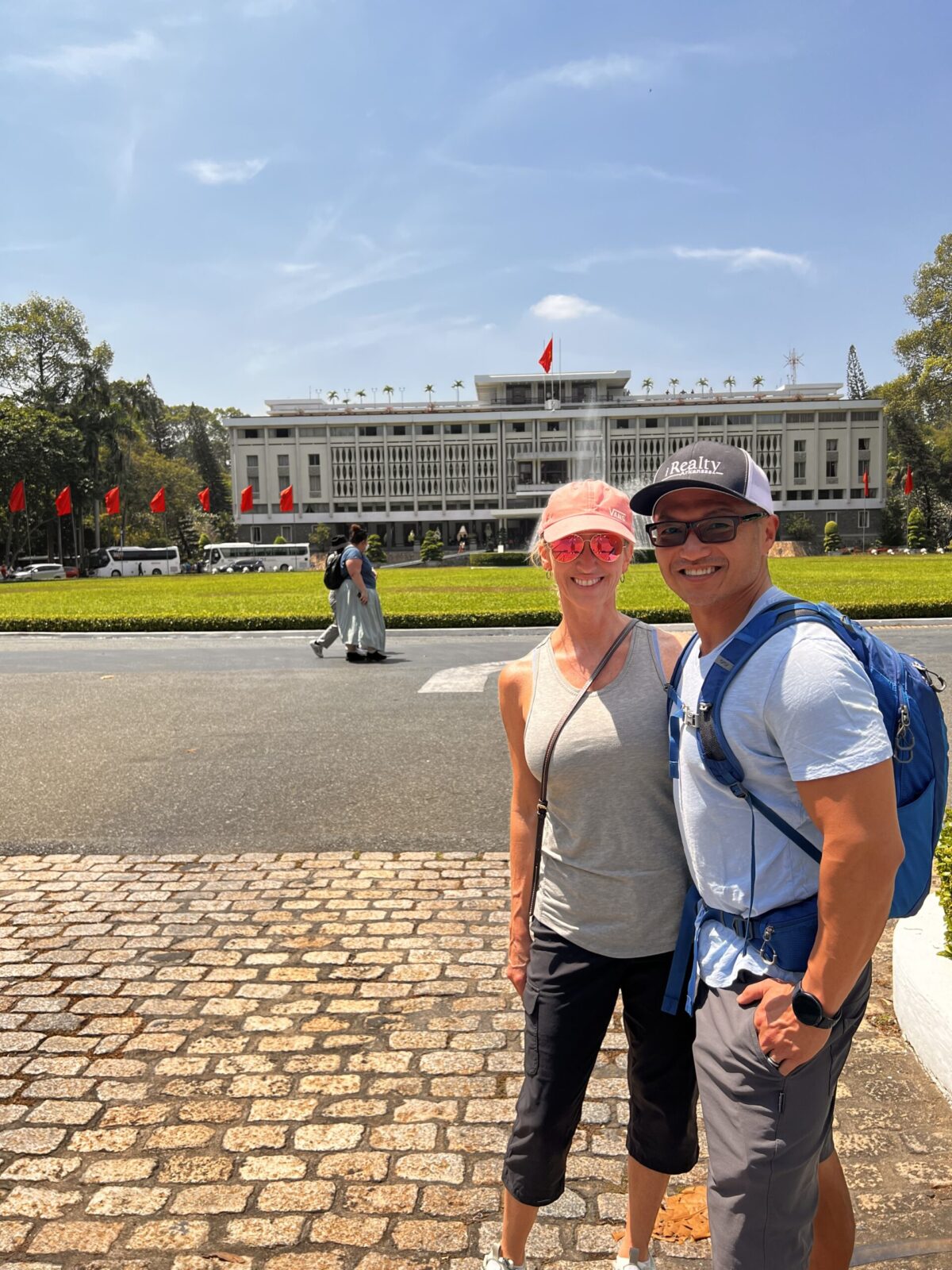
We've visited some of the places associated with that history. I've walked through Hỏa Lò Prison—the "Hanoi Hilton"—and visited the War Remnants Museum in Saigon. We've deliberately included some of that history in our travels.
And yes, history is told by the victors.
The story presented in Vietnam isn't always the story I learned in the United States. Seeing those differences is interesting in itself.
But here's the strange thing.
When I think about Vietnam now, I don't think about the war very much at all.
I think about food.
I think about family.
I think about mountains disappearing into mist and motorbikes flowing through Hanoi traffic. I think about tiny plastic stools and bowls of noodles and people laughing. I think about muddy shoes, bicycles, boats and caves.
The war is part of Vietnam's history.
An enormously important part.
But Vietnam is not a war.
It's a country.
After spending time there, that distinction feels almost embarrassingly obvious.
Going Back—and Staying Awhile
Our second trip was very different from our first.
This time we started with five nights in Saigon.
Instead of moving quickly through the city with a packed itinerary, we rented an apartment and settled in for a while.
We walked.
A lot.
We went to the gym. We ate. We explored neighborhoods on foot. We took Grab scooters when we wanted to go farther, weaving through Saigon traffic on the backs of motorbikes like people who had apparently become considerably more comfortable with Vietnamese traffic since our first terrified street crossing in Hanoi.
For a few days, we got to experience something closer to ordinary life—not because we were pretending to be locals, but because we weren't rushing from attraction to attraction either.
We had workouts and favorite places to eat. We could wander without worrying about what was next on the itinerary.
And I loved it.
Then, after five days of settling into Saigon, we did the logical thing.
We got on bicycles and rode toward Cambodia.
Through the Mekong on Two Wheels
We joined Art of Bicycle Trips and rode from Saigon through the Mekong Delta and eventually across the border into Cambodia.
It was exactly the kind of travel I'd begun to realize I loved.
On a bicycle, you don't watch a village flash past a window.
You hear people talking. You smell food cooking. You see kids playing and dogs sleeping and people going about ordinary lives that have absolutely nothing to do with your trip.
You're moving slowly enough to notice things.
You're also moving slowly enough for people to notice you.
And sometimes that's where the best experiences happen.
At one point, we biked through a village and somehow found ourselves invited to a wedding.
We hadn't planned it.
We didn't know anyone.
We were simply passing through, and suddenly we were guests.
The men were offered beer.
The women were offered...
yogurt.
Apparently gender equality had not yet reached the refreshment table.
But that's exactly the kind of thing that happens when you're moving slowly enough to be part of what's happening around you instead of watching it through a car window.
By then, the way we traveled was changing.
We were getting out of the car more.
Getting on bicycles.
Eating wherever something smelled good.
Stopping because something looked interesting rather than because somebody had put it on an itinerary.
Somewhere along the way, Vietnam was helping teach me how I wanted to travel.
After crossing into Cambodia, we eventually flew back to Vietnam, landing in Đồng Hới.
Because apparently bicycling through the Mekong Delta wasn't enough adventure for one trip.
We were going underground.
Son Doong
There are adventures, and then there are experiences that permanently divide your life into before I did that and after I did that.
Son Doong is one of those for me.
Vuong and I originally booked our expedition into the world's largest cave for 2020.
Then COVID happened.
We postponed.
And postponed again.
And again.
By the time we finally stood at the edge of the jungle in Phong Nha preparing to go underground, I'd had years to wonder exactly what I'd gotten myself into.
The answer was: quite a lot.
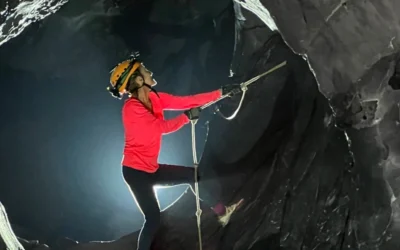
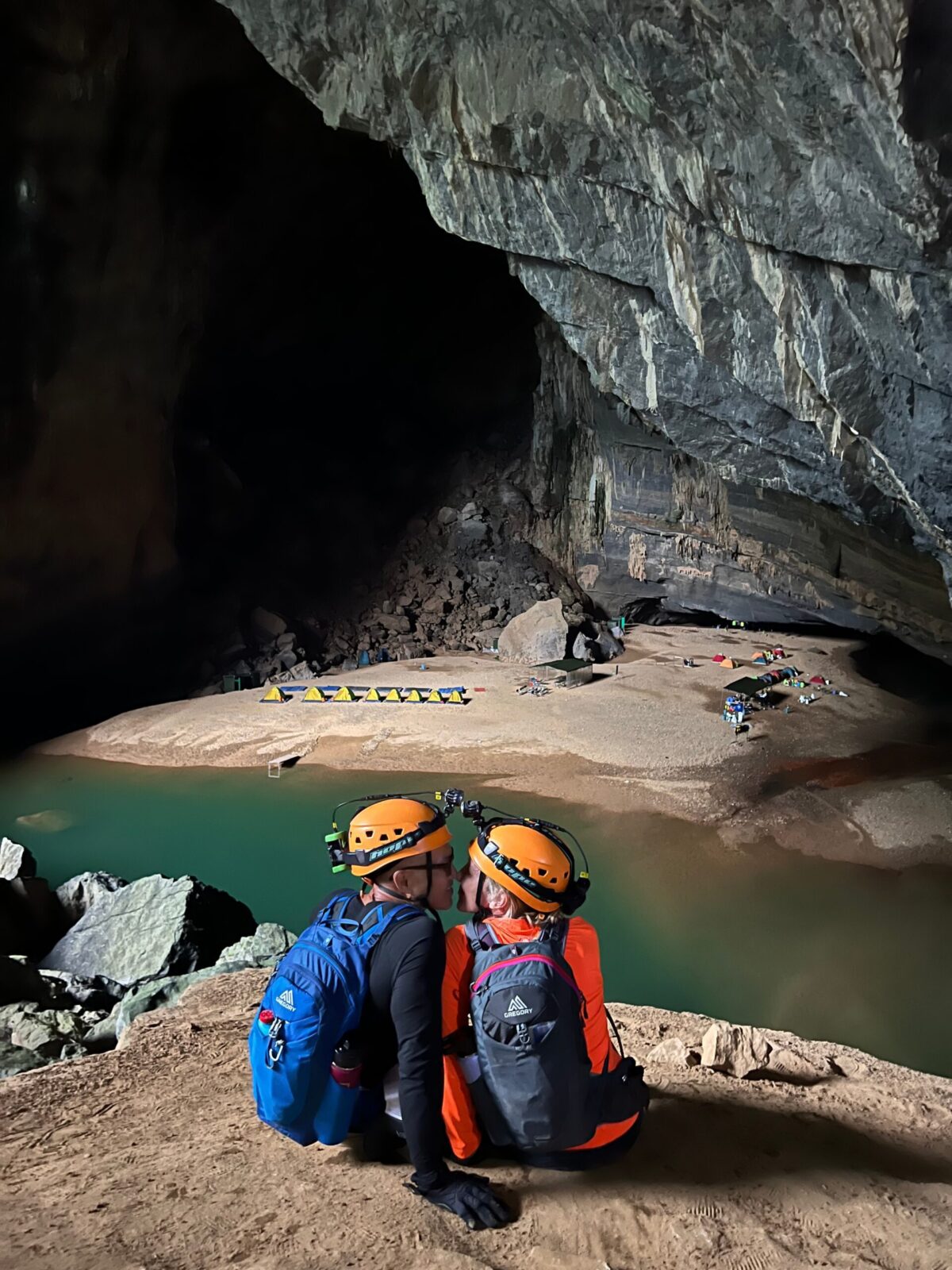
Getting to Son Doong isn't a matter of strolling through a cave entrance with a guide and a flashlight. The expedition requires trekking through jungle, scrambling over rocks, crossing rivers, climbing, swimming and camping underground.
On the first day alone, we crossed the river something like nineteen times.
My feet were wet.
There were leeches.
So many leeches.
And we hadn't even reached Son Doong yet.
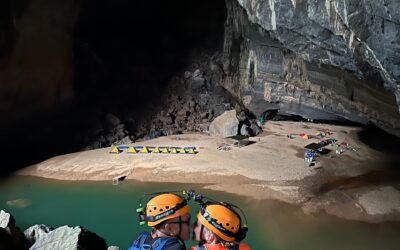
We spent our first night inside Hang En, itself one of the largest caves in the world, sleeping beneath an enormous cavern ceiling with daylight pouring through a distant entrance.
Then we went deeper.
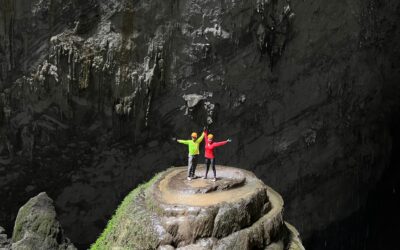
Son Doong is so large that describing it as a cave almost feels inadequate. Clouds form underground. Jungle grows where sections of the ceiling collapsed thousands of years ago and sunlight now reaches the cave floor.
We camped inside it.
We climbed through it.
We crossed an underground lake by raft.
We stood beneath enormous shafts of sunlight in the Garden of Edam, surrounded by vegetation growing hundreds of feet below the surface.
Eventually we climbed the Great Wall of Vietnam and emerged back into the outside world.
Dirty.
Exhausted.
Exhilarated.
And, in my case, apparently still transporting a few leeches.
I've had some extraordinary adventures in my life.
I'm not sure anything will ever top sleeping inside the largest cave in the world.
But one of the things I love about Vietnam is that some of my favorite memories happened nowhere near anything that would make a bucket list.
After Son Doong, we drove south toward Da Nang with our new friend Jerome, whom we'd met on the expedition.
Along the way, we stopped in Hue at a ramshackle little roadside restaurant and ate bún bò Huế.
It was fantastic.
We dropped Jerome off, ate our noodles and kept driving.
For years afterward, I could technically say I'd been to Hue.
I had not seen Hue.
Coming Back With Family
By our third trip, Vietnam was no longer a new country to us.
We returned on a cruise, with stops in Saigon, Da Nang and Ha Long Bay.
But instead of spending our northern stop returning to Ha Long Bay, we went inland to Ninh Binh.
And this time, Dad Do came with us.
My father-in-law was born and raised in Ninh Binh, and there's something entirely different about seeing a place alongside someone who belongs to it.
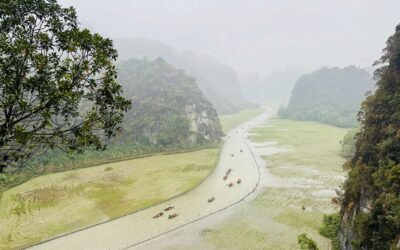
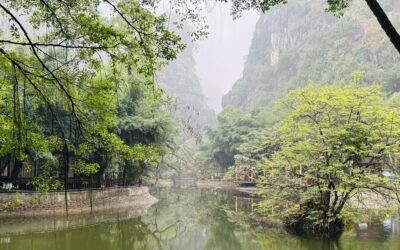
Ninh Binh is a landscape of limestone karsts rising almost vertically from green fields and waterways. We took a small boat through Tam Coc, drifting beneath the cliffs and through caves while our rower propelled us along in that wonderfully Ninh Binh way—using her feet.
We biked.
We explored Hoa Lu, Vietnam's ancient capital.
We ate goat.
We sat with Dad Do while he drank beer and reminisced about the place he'd come from.
I'd already been to Sa Pa, another spectacular landscape in northern Vietnam, but Ninh Binh felt completely different.
Eventually I figured out why.
In Sa Pa, I looked out at the landscape.
In Ninh Binh, I traveled through it.
And in Phong Nha?
I went inside it.
That may be one of my favorite things about Vietnam.
The scenery doesn't simply sit there looking pretty.
It invites you into it.
Giving Hue Another Chance
We also eventually returned to Hue and did considerably more than eat noodles.
Hue was Vietnam's imperial capital, and the Imperial City is a sprawling complex of gates, courtyards, temples and palaces associated with the Nguyễn Dynasty.
But for us, there was another layer.
Mom Do is a descendant of the Nguyễn Dynasty.
Walking through the Imperial City with someone whose own family history connects to the dynasty that once ruled there made the place feel very different.
That's something Vietnam has given me over and over.
History doesn't stay abstract for very long.
A place becomes connected to a person.
A meal becomes connected to a memory.
A landscape becomes connected to a family story.
And suddenly you're not simply sightseeing anymore.
The Fourth Time Was Different
In 2026, we returned for the fourth time.
Da Nang.
Hanoi.
Sa Pa.
Saigon.
Mostly places I'd already been.
But this trip was different for another reason.
We brought the kids.
They're in their twenties now, and there was something wonderful about watching them experience Vietnam for themselves.
I got to watch their reactions to the traffic and the food. To Hanoi and Saigon. To the mountains around Sa Pa. To all the things that had once been completely unfamiliar to me and had gradually become things I couldn't wait to show them.
On my first trip, I had been the one staring out the window trying to absorb this country that had been part of Vuong's story long before it became part of mine.
Now we were showing it to them.
We were showing them a place that had become part of our family's story.
Sa Pa made the passage of time especially obvious.
I'd first visited in 2017. Nearly a decade later, I returned to those same misty mountains, went back to Cat Cat Village and finally made it up Fansipan.
Sa Pa had changed.
It was more developed. More commercial.
But I'd changed too.
The woman who arrived in Vietnam in 2017 wanted someone waiting at the airport with her name on a sign and an itinerary already figured out.
The woman who came back in 2026 was considerably more likely to get on a scooter and see what happened.
I'm still occasionally reluctant about the scooter.
Then we rent one.
And we have the best time.
Some things apparently require four trips to learn.
And I'm Still Not Done
Here's the ridiculous part.
After four trips to Vietnam, I still haven't been to Nha Trang.
My husband was born there.
You would think we'd have gotten around to that by now.
I haven't been to Da Lat either—the mountain town we've occasionally talked about as a place we might retire someday.
And somehow, despite repeatedly traveling through central Vietnam, I have never been to Hoi An.
Hoi An!
Tourist Central.
Everyone goes to Hoi An.
Apparently I can bicycle through the Mekong Delta, cross into Cambodia, sleep inside the world's largest cave and visit Vietnam four separate times without managing to get myself to Hoi An.
So no, I haven't "done" Vietnam.
I don't even know what that would mean anymore.
Vietnam has given me some of the greatest adventures of my life.
I've bicycled through the Mekong Delta and crossed into Cambodia. I've slept inside the largest cave in the world. I've traveled through the mountains of Sa Pa and between the karsts of Ninh Binh. I've wandered Hanoi and Saigon, eaten incredible meals in decidedly unimpressive-looking places, explored the country with my in-laws, and eventually brought our kids back to experience it for themselves.
And there is still so much left.
Nha Trang.
Da Lat.
Yes, eventually, Hoi An.
Places I don't even know yet that I'll want to see.
Maybe Vietnam is my favorite country in the world.
Ask me again after the fifth trip.
Because I'm definitely not done with Vietnam.